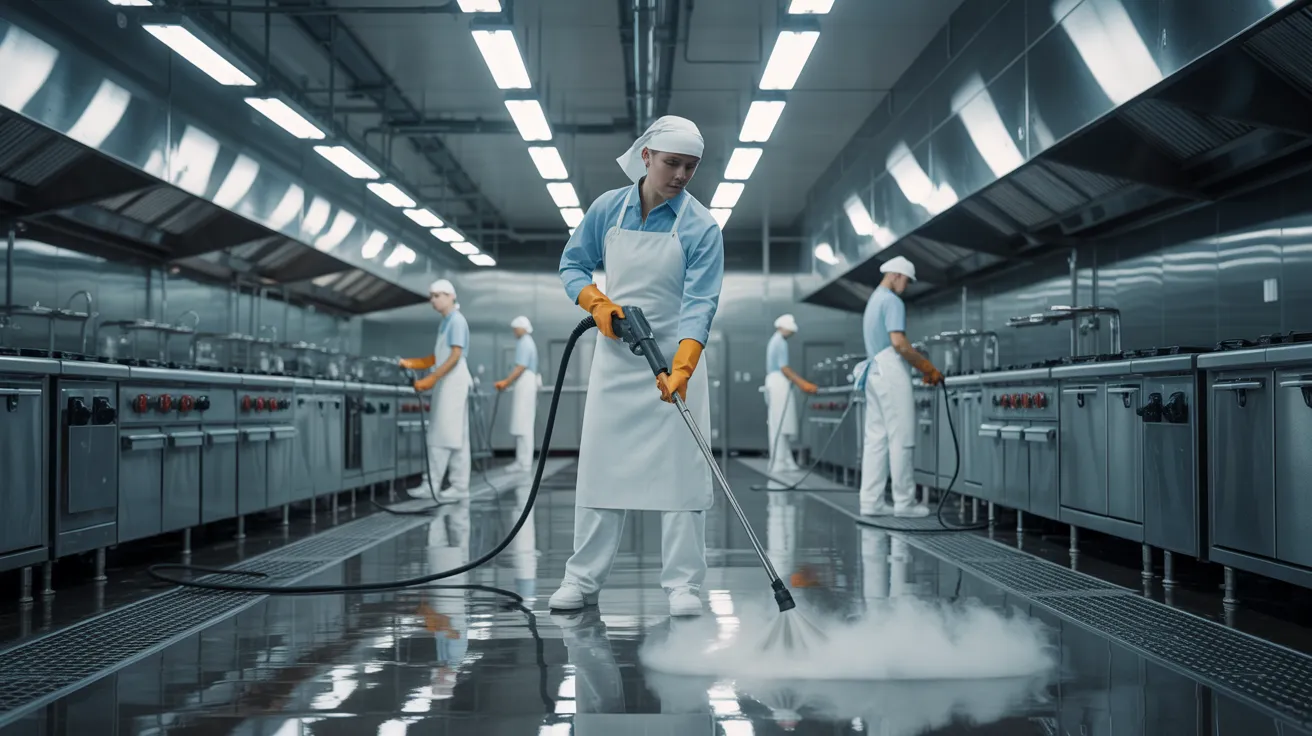
Food hygiene and commercial cleaning experts in Brampton support your business in maintaining restaurants, food supply centers, bakeries, warehouses, and mobile food operations to code. They sanitize high-touch points, food-contact surfaces, equipment, floors, drains, restrooms, and prep areas with approved chemicals, proper dilution, and recorded contact times.
Key Takeaways
- Food safety cleaning technicians from Brampton work with restaurants, grocery departments, commissaries, warehouses, bakeries, schools, mobile vendors, and allergen-sensitive operations.
- Cross-contamination prevention is accomplished by sanitizing high-touch surfaces, food-contact equipment, kitchens, floors, drains, restrooms, and storage areas with area-specific procedures.
- Recording of finishing through tests, audits, and action records confirms approved contractors have confirmed approved sanitizer dilution, alignment, and exposure duration.
- Sanitation schedules should follow threat, production volume, switches, releases, and guidelines, with everyday, periodic, and seasonal duties assigned by area.
- Liability, colour-coded implements, HACCP, public-health competency, WHMIS education, testimonials, and inspection-ready sanitation files are essential supplier qualifications.
Brampton Operations That Need Food Safety Cleaning: Which Ones?
Any Brampton facility that processes, stores, prepares, packages, or distributes food needs hygiene cleaning. You must follow it if your establishment falls under public health review, food rules, or HACCP systems. That requirement covers food service venues, employee cafes, supply centers, retail departments, meat shops, fish areas, local stores, and institutional food prep areas.
You also need proper hygiene cleaning in warehouses, food manufacturing plants, cold storage sites, retail bakeries, school nutrition programs, banquet halls, and meal delivery hubs. Mobile and temporary operations count too, including catering vehicles, market vendors, and seasonal stalls. If your staff work with raw supplies, divide prepared foods, warm dishes, or organize allergen inventory, your facility needs recorded sanitation procedures. In Brampton, sanitation isn't voluntary; it's part of regulatory, business, and safety compliance.
Which Areas Do Brampton Cleaning Experts Cover?
You require experienced cleaning professionals who sanitize frequently touched areas, cooking areas, floor areas, and restroom facilities to ensure compliance with food safety and health standards. These areas are targeted due to their high cross-contamination potential, slip and fall dangers, and health code violations.
If you grasp what they sanitize, you'll be able to confirm your operation satisfies all operational and regulatory compliance needs.
Addressing High-Touch Surface Sterilization
assign how periodically each area is disinfected
Preventing secondary contamination by swapping towels, following sequential processes, and dividing disinfection materials according to section maintains your disinfection plan remains documented, auditable, and ready for inspection.
Kitchen Areas, Floor Surfaces, and Bathroom Spaces
Professional cleaners in Brampton concentrate on kitchens, floors, and restrooms given that each location involves specific food safety, slip-and-fall, and public health requirements. In industrial kitchens, you need degreasing on cook lines, equipment exteriors, drains, prep surfaces, and splash zones to minimize contamination and pest pressure.
Documented floor maintenance is likewise provided as part of the service.
Restroom sanitation involves disinfecting touchpoints, fixtures, partitions, dispensers, and waste containers, replenishing amenities and managing odor. They also maintain restaurant cleaning supply rooms where product storage, sink cleanliness, and drain systems impact daily sanitation standards and worker protection.
The Importance of Food Safety Cleaning in Brampton
To adhere to health code requirements and succeed in audits, Brampton establishments must maintain appropriate cleaning protocols. You also minimize bacterial spread through proper cleaning of food-preparation surfaces, appliances, and frequently-touched items. Most importantly, you help protect public health by lowering the risk of foodborne illness in your facility.
Food Safety Regulations
Since Brampton food establishments must follow rigorous sanitary regulations, your food safety cleaning directly affects your capacity to satisfy health codes, ensure the safety of diners, and sidestep regulatory penalties. You must maintain sanitized food contact points, documented cleaning schedules, safe chemical management, and verifiable staff procedures that correspond to municipal and provincial inspection expectations.
During inspections of your operation, officials check if your cleaning procedures ensures protected inventory management, machinery hygiene, waste handling, and facility cleanliness.
Cross-Contamination Prevention
Maintaining health code standards copyrights on your capacity to prevent cross-contamination during everyday food preparation and sanitation. You must separate raw ingredients from ready-to-eat foods, sanitize prep surfaces between tasks, and position cleaning agents away from food surfaces. Clear procedures reduce transfer risks and support consistent compliance during inspections.
Implementing allergen segregation helps keep priority allergens from contacting communal work zones, bins, or devices. Deploy dedicated cutting boards, color-coded tools, and clear tool marking so staff don't mix items while preparing or distributing. Enforce hand hygiene find details about following fresh proteins, aquatic items, egg products, or allergen materials. Replace wiping cloths regularly, and verify sanitizer strength with test strips. When your team learns these guidelines every shift, you establish a more hygienic, safer workplace that satisfies Brampton's food safety needs daily.
Public Health Protection
When food safety cleaning breaks down, you don't just risk a failed inspection—you heighten the likelihood of foodborne illness affecting customers, staff, and the wider Brampton community. You also weaken your role in safeguarding community wellness, especially in busy food facilities where pathogens travel quickly through surfaces, equipment, and touchpoints.
You need cleaning protocols that remove contaminants, sanitize effectively, and confirm results. This requires following contact periods, selecting approved disinfectants, logging schedules, and coaching employees to meet regulatory requirements. These controls promote pathogen control by decreasing microbial counts before reaching surfaces or food. Throughout Brampton, effective sanitation protects vulnerable communities, reduces outbreak risk, and demonstrates accountability. When you follow proper protocols, you exceed regulations—you lower hazards and enable safer food service throughout the area.
In What Ways Does Cleaning Help Achieve Food Safety Compliance?
Maintaining thorough cleaning protocols ensures food safety compliance by reducing contamination risks, limiting pathogen development, and keeping your facility in accordance with sanitation requirements under HACCP-based programs and public health regulations. You confirm that food-contact surfaces stay visibly clean and microbiologically controlled, supporting documented preventive controls and inspection readiness.
Cleaning programs additionally bolster allergen management by removing residues that can lead to undeclared allergen exposure.
When Should You Schedule Commercial Cleaning?
maximum production periods, product switches, spillage events
daily routines
Selecting the Right Brampton Cleaning Experts: Key Considerations
Screen providers initially by their food-safe sanitation requirements—not budget alone. You need to verify that every company meets CFIA, public health, and HACCP standards for your operation. Demand proof of insurance, WHMIS compliance, training records, and management systems. Evaluate technician understanding of cross-contamination risks, chemical safety, and documented sanitation practices.
You must also evaluate business consistency and accountability. Seek references from food facilities in Brampton, then assess response times, corrective-action procedures, and communication standards. Ensure the company enables supplier checks and can provide inspection-compliant records when authorities or third parties demand verification. Verify equipment is maintained, color-coded items are deployed correctly, and site-specific hazards are understood. A qualified provider protects compliance, product safety, and your brand reputation.
Which components are contained in a hygiene cleaning program?
Put together a written program that clarifies every sanitation duty, standard, and accountability before production begins. You should list cleaning frequencies, approved chemicals, dilution rates, contact times, tools, and verification methods for each zone, surface, and piece of equipment. Make sure to include pre-operational inspections, corrective actions, and employee training requirements.
Your strategy should also address cross-contamination controls, waste handling, pest-prevention measures, and documented schedules for facilities, drains, flooring, and food-preparation surfaces. Outline how you'll separate raw and ready-to-eat processes, support ingredient tracking, and maintain accurate allergen labeling through validated cleaning between product changes. You should establish accountability, keep signed records, and assess results against regulatory standards, HACCP controls, and customer requirements. When gaps appear, update procedures immediately and retrain staff.
Commonly Requested Inquiries
Are sanitation providers available for nighttime operations in Brampton properties?
If you run regulated facilities, you'll also require documentation that support inspections and ensure compliance.
Are hazard containment services provided from sanitation professionals?
Yes, you can expect many Brampton cleaning experts to offer emergency spill response services. They manage hazardous materials, evaluate dangers, contain contamination, and begin swift cleanup to reduce exposure and operational disruption. You should verify arrival timeframes, professional credentials, PPE protocols, and disposal procedures. If your facility must comply with industry standards, choose a provider that documents incidents, follows compliant sanitation standards, and supports audit readiness.
Do plant-based disinfectants function safely on food preparation areas?
Absolutely, natural disinfectants can be secure for food preparation areas when you opt for products labeled food safe and meeting regulatory standards. You must verify contact times, mixing proportions, and rinse procedures before use. Botanical formulations reduce toxic chemical contact, though you still need demonstration of efficacy against specific pathogens. For ensuring residue-free conditions, follow manufacturer instructions exactly and ensure the disinfecting agent adheres to applicable food industry sanitation standards.
Can cleaning schedules adapt with production fluctuations?
Without question, cleaning schedules customize readily for seasonal variations. Adapt schedules, labor allocation, chemicals, and verification steps to correspond to operational cycles while preserving regulatory adherence. Reduce equipment downtime by scheduling cleaning amid line changes, high demand periods, and usage patterns. Additionally revise procedural documents, training, and environmental monitoring to reflect temporary risks, new allergens, or increased soiling. Regular reviews maintain your schedule functional.
Will commercial cleaners teach your staff on hygiene best practices?
Indeed, professional cleaners typically provide staff training on sanitation best practices. Your staff obtains training on proper chemical use, exposure durations, cross-contamination prevention, equipment breakdown, and record-keeping. They typically follow training with HACCP, GMP, and CFIA or regional health standards criteria. Many perform sanitation audits to verify compliance, reveal issues, and reinforce corrective actions. This supports you in establish reliable processes, pass inspections, and decrease foodborne illness risks each day.
Final Thoughts
Through engaging Brampton food safety and commercial cleaning experts, you accomplish much beyond organizing—you ensure your facility for inspections and your procedures meet requirements. From kitchen spaces to processing areas, all clean areas and organized zones reduce contamination risks and avoid major losses. Through scheduling maintenance at proper intervals and adhering to a comprehensive cleaning program, you safeguard employees, clients, and your good name. Within strict regulatory frameworks, clean conditions must be a priority—they represent good business practice.